Fifty years a sociologist: insight from the pandemic

Three Minute Fellow’s Introduction. Wednesday 24 November 2021
Academy of Social Sciences in Australia
________________________________________________________________________________________

I am fifty years a sociologist. The COVID-19 pandemic brought front of mind for me the reason why.

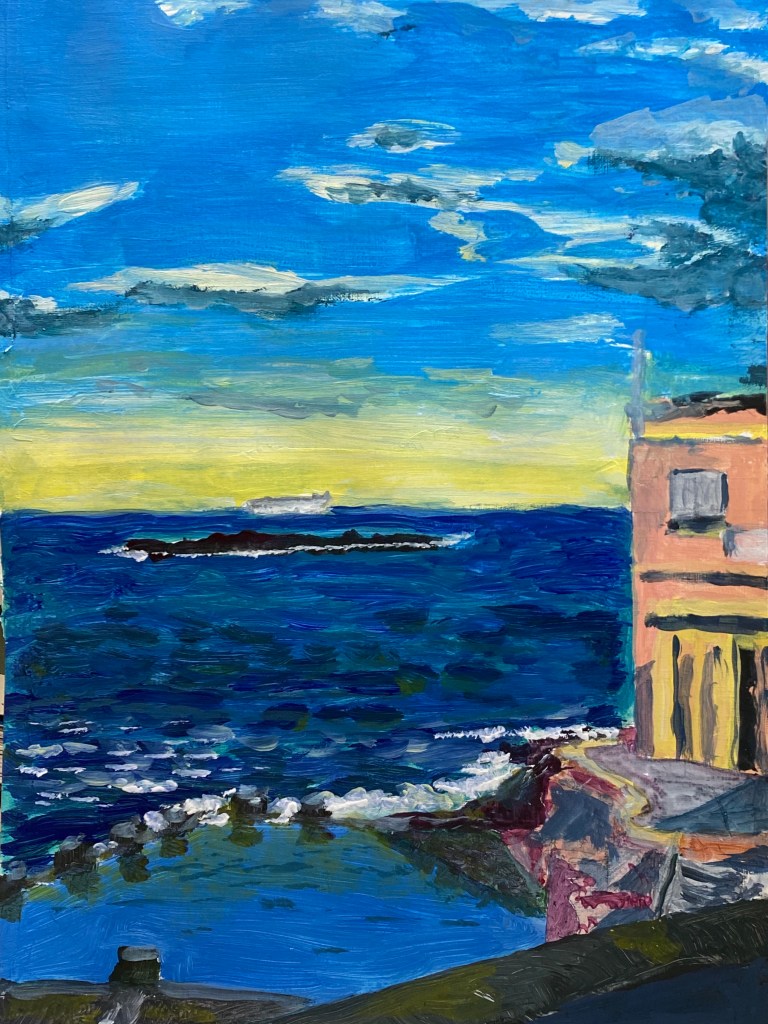
It started in April 2020. For days I watched the Ruby Princess cruise ship bobbing on the ocean off Coogee Beach near my home and painted a picture of it. Early reports from New York were that people of colour were succumbing to the disease more quickly and dramatically than richer White folks. So, race was a proxy for class and class underpinned vulnerabilities in a racially encoded society.

Ruby Princess off-shore Coogee

I wondered how the pandemic would play out in Australia, touted by our leaders as the most successful multicultural society in the world. What would the lockdown mean for our culturally diverse communities? Australia might be different. But was it?  How? Why? 

I started to look for patterns and data which might help me find the answers.

At the time, I thought that the health system had long embedded the data-needs of multicultural Australia. Apparently not. The multifarious testing regimes did not collect any ethnic data. We did not know how the virus was spreading in ethnic communities. Nor who was being tested, missing testing or the languages we would we need to get information to vulnerable people.

I wrote to Minister Hunt’s office to ask for Cultural and Linguistic Diversity (CALD) data. The response was that the data was not available. Why? Because all jurisdictions had to agree to mandate its collection, and none had asked for this in twenty years.

You get the picture.

As it turned out, the National Health and Medical Research Council COVID19 committee had advised the government in mid 2020 that CALD needs and experiences should be identified but provided no advice on how this was to be done. Why? I was told the Government did not want to hear that advice.

Around that time, I joined with a network of people advocating how critically important the information was to reduce the impact of the pandemic on multicultural communities. Getting information was like squeezing blood. It would take over a year to make significant headway. By then, there had been hundreds of deaths and thousands of hospitalisations. Hardest hit were the multicultural communities of Sydney and Melbourne.

In November 2020 the Government finally established a CALD advisory group on COVID19. This group made the collection of CALD data an imperative and by September 2021 it was taking shape.

A team of data scientists has now extracted the social and cultural data from the immunisation register and tied it to the government data network. Finally, frontline health teams have the data to identify communities with low vaccination rates and enable effective communication with those who need it.

Having seen the data, many of those who had previously denied its value have understood how critical it is to our well-being. Perhaps they have realised how much damage was done because of the data hesitancy they championed.

My learning from the Plague Year is that the infection is about biology, the plague is about social science. If you’re not counted, you don’t count. Sociology 101.

In COVID-19, is Eighty Percent vaxxed the same everywhere and for everyone? If not, how do we make sure it becomes so?

The NSW government has made much of the promise that something good will happen when localities achieve 80% of second jabs of eligible people. However not all numbers are equal. It may be rather easier to reach the absolute number of 80% of the population over 12 years of age in some places than others. The difference depends on what proportion of the total population in each local government area (LGA) in NSW is over 12 years of age. Sitting behind the 80% figure may be an assumption that every LGA has a similar age and socio-cultural profile. 

They do not, and the vulnerable have very different degrees and causes of vulnerability – primarily determined by the level of crowding in residential accommodation, which is a function of income and to some extent culture (attitudes to having  large families), and place in the life course. In Australia these factors are found most commonly in multicultural and Indigenous communities. So clear multicultural and Indigenous equity policies that identify and respond to cultural diversity pro-actively rather than reactively, are crucial planks in the policy process. Unfortunately those planks are too often missing or barely present, often  attached as an afterthought in response to some emergent crisis.

Not only does every LGA have a different profile, but also the LGAs “of concern” during Delta have higher proportions of people under 12, and of culturally diverse or Indigenous backgrounds – as well as many more reservoirs of infection into which everyone can be dipped.  Let’s look at Blacktown in Sydney’s west, and Northern Beaches across the Harbour along the coast to the north, two very different places with different vulnerability factors, different outcomes, and different prospects. At the turn of 2021, Northern Beaches had an intensive outbreak of an earlier viral mutation; it faced local lockdown, divided at the bridge over the Narrabeen Lakes. The lockdown lasted a few weeks until total suppression was achieved. Blacktown nine months later as one of the most intensive areas of concern is part of a total lockdown zone.

When “80%” of Blacktown’s over twelve population is doubled jabbed, actually only 64% of the population will have been inoculated. However in Northern Beaches, also a large LGA but not one of concern, when 80% of the over 12s are inoculated this will mean 68% of the population will have been double jabbed. For Blacktown to reach the underlying level that Northern Beaches gets to with 80% will require its residents to achieve 85.4%.

Here’s the table that shows how this works.

LocalityAge group2016 N2016 %2021 N2021 %
Blacktown0-126690019.2%8090019.8%
 13+28108380.8%33142880.2%
 Total347983100%412328100%
Northern 0-124410016.6%4420016%
Beaches13+22136583.4%23070084%
 Total265465100%274900100%

Given the fetish for numerical magic that now pervades political discourse, the model proposed by the NSW government in fact creates a reservoir proportionately 25% larger of unvaccinated children in Blacktown compared with Northern Beaches. Furthermore this reservoir is contained in dwellings that are more overcrowded, poorer, less well ventilated, and with adults who are forced to travel for work, if they are lucky enough to have it. While an emotionally lacerated and more financially stressed western suburbs population surges towards vaccination as a promoted panacea for their woes, in fact to achieve an outcome that will work for them at the 80% level will demand a higher real world effort than they believe they are being called upon to make. In the unvaccinated pool may well be large numbers of the elderly, refugees and asylum seekers, and those with low levels of English competence and mother tongue literacy.

But does this matter? Some commentators claim that only 2% of under twelves who might get infected will get “very sick”. Sounds small, but apart from not knowing how many of the unvaccinated will get sick if exposed, the ones who do get sick can get seriously unwell – with a potentially endless long COVID post- viral scenario affecting them significantly. If ten percent of the under twelves are infected (a very conservative count if they are the vast majority of the reservoirs of potential targets for a very successful virus), then in Blacktown that will be 8000 or so – of whom 150 or more would be seriously affected.

The twenty percent of over 12s who are not vaxxed at 80% (or the even more scary 30% at 70% first proposed October relief from the lockdown) make up from 66,000 to 100,000 in Blacktown. So if we have 80% as our goal (and it has been reported that NSW Health is trying to convince science-hesitant politicians to ensure 85% are double-vaxxed) then the pool of unvaxxed at opening up in Blacktown will be about 132,000, half of whom will be kids under twelve. So ultimately 80% of “adults” defined as over 12, is 60% of the population. There is no way that figure can ensure a freedom of movement as now is promised. Rather it will ensure, at a daily conservative  .05% infection rate and no break through in inoculated people, that about 60 cases will occur, with up to three hospitalisations a day, and probably one death a week, depending on age and co-morbidities.

We need to recognise that Blacktown, a hub for Indian communities among many others, has been extremely active in seeking vaccination since Pfizer has been made available ; its residents may indeed exceed the 80% goal (at writing they are at 86% on first jab – over sixteens, so about 60% of the population overall at the moment). Such local communities will need to “go for gold” (over 90% of the over twelves) if they wish to avoid the inevitable local lockdowns that are a predictable part of the opening-up policy of the NSW government. They will also need sturdy local paediatric intensive care facilities, and an expensive and extensive renovation program for local schools to ensure high levels of ventilation, HEPA filters and social distancing strategies in classrooms. However with tens of thousands of unvaccinated adults exposed to viral attack whenever they leave home, and bringing it back into homes with children when they return, the rosy future being painted may have a different hue when that time arrives.  If the 80% figure was of the whole population (essentially meaning all adults over 12 are doubled jabbed), then the desired “herd immunity” saturation for the vaccine might be achieved and the children, potential carriers and victims, more effectively protected. 

The need to keep testing and then tracing infected people underpins the pathways we have been promised. The Australian testing environment demonstrates the craziness and the contradictions of our history as a capitalist federation which promotes itself as the global multicultural success story. In each state testing can be carried out in at least three different institutional frameworks, with only a minimal data set collected across all of them. The Commonwealth cannot require the states to do anything in this regard – until infection is determined when notification is mandated through an agreement between the jurisdictions (all of which have to agree if anything is to be changed). Notification only requires name, age, gender and location. If one is tested at a Commonwealth respiratory clinic (essentially a GP clinic specially funded by the Commonwealth) then data can be collected on language and country of birth if the patient agrees. This data is spasmodically collected and is not processed for immediate use by public health agencies. Private testing agencies and private GP clinics do not regularly collect this information because it is not mandated so that most commercial software does not have the capacity, and no one has decided to assert the authority to require it to do so. The states have differing policies in this regard at their testing locations, where it is usually only at the second stage, tracing of infected cases and their close contacts, that preferred language is requested, if an interpreter is thought to be required. There is no sign that these data are collected, collated or used.

Ultimately we are not well prepared for the implications of the current road plans out of lockdowns. Our testing systems are dilapidated, unintegrated and deficient in key data needed to ensure we stay ahead of the curve. It is possible to overcome these problems – however they have to be recognised and addressed. This will not be an expensive exercise compared with the handouts to major employers provided during Jobkeeper,  yet when achieved the results will be salutary and valuable in ensuring future well-being.  It would be great if there were some evidence of bravery among our leadership in this regard.

In NSW the State Government notes that “work is being done”  to integrate the vaccine status of people with their ServiceNSW profile so that the QR code process can automatically capture this information – a sort of vaccine passport that will increasingly be required to enter post 70% public places. Each jurisdiction however is playing its own game, which could all be standardised around the most effective solution.  We would also need to ensure asylum seekers, temporary visa holders and people with neither codes nor smart phones were included. If as part of the same exercise the language people speak at home, their country of birth and their arrival year in Australia were also entered (just once), and the QR codes were adapted to be used in all testing regimes in the state, then an almost instantaneous picture of the patterns of testing would be available.

As well, languages required for communication would be known ahead of any surges, with both text and audio messages being sent to appropriate language speakers. Locality by locality, age group by age group, language community by community, the front line public health workers would know the groups in danger of missing testing, of missing vaccinations, and to some extent their patterns of movement and contact.

We already have a surveillance system in place, but it operates erratically, four days or more in arrears, and with no community content. It’s time that we became the successful multicultural nation our government claims we are, by foregrounding cultural diversity and Indigeneity in our strategic thinking, saving lives and livelihoods in the process.

Gaming the Virus: fighting the last war cannot win the next one

Gaming the virus in NSW: how fighting the last war will not win the next one.

One of the few extraordinary benefits for sociologists of the pandemic must be the real time experiments it generates in the relation between social theory and social practice – or put succinctly, how class continues to be an issue in contemporary Australia, most sharply in neo-con libertarian jurisdictions, less so but still there in more social democratic communalist states. Alan Kohler has pointed to the failure of conservatism (he is too hopeful) while Ross Gittins sees the pattern of infection as a reflection of class (too absolute though getting there). Age, race, and gender were called out early on. The virus is alert to the best social space for its transmission to accelerate, where crowding at home, at work and travelling, poor communication, and a mobile population produce the optimum hosts. If trust fractures so that the capacity of the social order to protect people from the virus is undermined, then that social order can rapidly follow. The social remains only a step ahead of chaos, imbued with the ever-present imagined tension between individual and communal well-being.

As the public imaginary has become saturated with metaphors for the “battle” against COVID19 Delta, so the real-world takeover of the key cities in Afghanistan by the Taliban has dominated the real politik. Just as the American Maginot line at Kabul was overwhelmed by the Afghan anti-imperialists, COVID is surrounding and breaking through our defences. The Taliban is a social movement, the impact of which on modern social values and relations we may well abhor. COVID Delta is a social disease, the impact of which on our social sinews – trust – we should rightly fear.  The moment Trump decided to get out (almost the same strategy he propounded in the USA against COVID in 2020) the idea of a single line of resistance that could be sustained by the Kabul government was undermined. Giving up on COVID Zero has a similar smell about it. We must learn to live with them both, some of our leaders now pronounce.

Returning to the COVID battle, there have been calls to refresh the ANZAC spirit, stand together, and face the foe (though Gallipoli was just a better version of the Kabul withdrawal – better planned and executed but in essence the same). We have been told we will be “throwing everything at it”, and sending in our best and bravest. Instead of generals fighting the last war (though we have some of them), we have scientists, grim faced, calling on the citizen soldiers to stand firm, obey orders, and suffer for the greater good. Uniforms abound in the battle lines – police, nurses, military – some with boots on the ground, some with needles in our arms, some now with pepper bombs. Arm-chair strategists and tacticians (including yours truly) argue the toss, seeking to decipher the war plan of a now enshrined and variously interpreted Doherty Report.

Meanwhile cells of guerrillas jump the lines, acting as carriers for the virus as it seeks out the least socially integrated and most distrustful populations as its primary vectors.  It breeds too in the densely settled and impossibly crowded parts of our cities, as well as in the least well-defended outstations of urbanity. The emotions of fear, anxiety, and desperation multiply, while the elites in their palaces announce nostrums that simply erode the capacity of the key weapon, trust, to do its work of building resilience and security.

Sticking with the perhaps overworked metaphors, our best weapon against the virus remains the same one that so escaped us in Afghanistan, on the ground, people-based Intelligence. Intelligence is based on thousands of pieces of information, carefully collected and assessed, integrated and tested, applied and projected. In Afghanistan “our side” allowed our fantasies to supplant our science. Ditto in NSW as our troops chase around the landscape, always in arrears, always behind the ball.

Let us return to the claim “we are throwing everything at it”. We didn’t in Afghanistan and we are not doing it here; we fight with one hand behind our backs because we do not trust the people who are taking the brunt of the attack. We have little or any intelligence of where the virus will crest next – all we know is what has happened, not where we need to be to stop the spread. We have no real idea of how the affected populations are withdrawing from the battle, misleading us into believing that what we see is what is real.

We operate as though we need to placate the as yet minimally affected allied populations to keep them happy with the elite’s management of the war, rather than being smart and breaking the onslaught where it is weakest, while containing it where it appears strongest. We fail to ask the simplest question of our multicultural population – who are you and how do we help you to join the battle for what we call “freedom”?

In the year since it became clear that ethnicity was a proxy for many other dimensions of vulnerability (another echo of Afghanistan) , we have tested millions of Australians, many over and over. Had we at that time normalised requests from people being tested for data on language spoken and country of birth, we would have a heat map of communal vulnerabilities, and systematic guidance of where the enemy was moving, and where we should have a sense of looming threat. It took ages for this awareness to penetrate the consciousness of our strategists – in November 2020 Victoria began to see the value of this data, In February the Commonwealth began collecting the data. Neither of these jurisdictions release this information as they fear it will be used by the anti-vaxxer movement (a fifth column for the virus) to stigmatise ethnic minorities – a common enough practice without the data, and brought to a high art in the naming and shaming of ethnic neighbourhoods in west and south west Sydney. However New South Wales refuses to do so, despite the widespread affirmation from communities caught on the front line that such information would help them respond immediately and directly to the threats their people are experiencing.

In a recent Lancet article,  Daniel Pan and his colleagues explored the issues associated with the higher incidence of COVID and the poorer outcomes in the UK for Black and Asian ethnic groups. The group is trying to work out whether the social inequality(such as those identified in this article)  affecting non-Whites produces this ethnic effect, or whether there are bio-social factors that predispose non-White races to infection and severity of outcomes. In the UK they are able to ask these questions as the data is there – in Australia the data is not there in NSW, where the ideology of individual “freedom” squeezes out the reality of social impact . Even where some race data is available, as with Indigenous communities in western NSW, it was only after the virus reached the vulnerable groups that a reaction was instituted. However, the Health people could tell very quickly that Aboriginal Australians were being attacked, because they collect the data on Indigeneity, even if they did nothing about checking their low participation in testing and vaccination in the lead up. 

My approaches to Minister Hazzard have been ignored; my contact with the Premier’s office were originally treated with intense interest, and then frozen. My interactions with senior Health officials have generated tirades, suggesting I undervalued all the work their front line people had done talking with “ethnic leaders” and helping the communal pop-up clinics to operate. Yet every one of my ethnic community contacts in those areas of the battlefront are bemused and then dismayed to realise there is a weapon (collecting, processing and using ethnic language data by post code in testing and vaccine booking)  that could have helped them protect their people, and yet it has been dismissed without even a try-out. Moreover when you hear the NSW government ministers claim they have done everything possible that NSW Health has advised, remember where the opposition to testing is strongest- in NSW Health. What war are they fighting? What game do they now need to change?

Going CALD on COVID….

Last week about 50 community leaders from across a wide range of ethnic groups and agencies, were invited to a Zoom consultation with the federal Department of Health team charged with the vaccines rollout for COVID19. Eight months ago an NHMRC advisory group had just identified these groups as potentially vulnerable, and requiring accurate information and communication support as the virus spread. A critical issue was the lack of hard data about the spread of the virus in language communities. Now finally as the vaccines roll out and there is a clear interest in as many people as possible receiving them, the focus on CALD Australia has intensified and many proposals sidelined for over half a year are now being put in place.

Back in March 2020, with the first COVID lockdown in place, and reports appearing of the way the virus was affecting people of colour in the USA and UK, I started to look at the research in Australia and the data in the government data collecting agencies about people our bureaucracies  currently label CALDs – Cultural and Linguistic Different/Diverse Australians.

Then all the evidence from the worst of our allies proved indicative – meat works, nursing homes, crowded towers of poor people of colour – we had them all. And still as the death tolls rose, borders were frozen and lockdowns were intensified, no one thought it might be helpful to discover how the disease was tracking in different cultural communities, and what partnering with those communities might be advisable to make sure the messages of safety and survival were accurately delivered where they were needed most.

Probably the most abysmal outbreak occurred at St Basil’s Greek Orthodox Nursing Home in Fawkner, in north Melbourne. As early as July 19, Neos Kosmos reported that the then 32 cases among staff and residents had taken off in a few days.  As of 12 September 2020 the ABC reported 183 cases and 44 deaths (the home had 150 residents). The independent review of St Basil’s released by the Commonwealth in December 2020 made no mention of the lack of data, its six “key areas” carefully avoiding the issue. 

Perhaps it was just that no one thought about the data question, as it was not important or useful.

Well, no. The NHMRC COVID advisory committee, chaired by Prof Michael Kidd, knew all about it from the outset, as did its politician members – from the ALP and the Liberals, both medicos who had communicated their concerns back to their parties. The committee was anxious to identify the vulnerable groups that would require close attention and support. Migrants and similar CALD people were at front of mind, but unlike any other priority groups, they were left un-enumerated and without any sense of scope, dimension or extent. This “don’t mention the war” attitude was the direct result of Government push back, both within the public service hierarchy (when Prof Brendan Murphy was CMO), and in the offices of key ministers. My inbox is full of emails from key players saying “not our problem”. While the Morrison government has been all talk and little action on cultural diversity  (“the most successful multicultural society in the world” is nothing of the sort), the Labor opposition has also been missing in action, perhaps part of its small target position on any public policy that might be controversial.

I went through my networks of contacts in the ALP, including those who had recently invited me to contribute to policy development, and made the case that the Opposition should be pushing hard for recognition of cultural groups as dangerously marginalised by the government policy position. There was slightly more than a brush-off – I was told the Party had no problem with me pushing on the issue, but they would not support the argument.

I went through my network of contacts in the Liberal party in NSW and the national government, having after all just spent three (unexpected) years as a member of the MulticulturalNSW Advisory Board to a rapid sequence of Liberal ministers. I have been brushed off by some of the best over the years, but I came across deeply entrenched resistance to any data collection in NSW from those with policy responsibilities in both the public service and politicians’ offices. I also learnt from Victorian multicultural policy people that communication with state Health had disintegrated, with any attempt by them to advocate for better strategies and data collection not merely ignored, but effectively disregarded.

Then as the debate re-emerged in late 2020, following the shifting of Murphy to Health Secretary, and Kidd to deputy Chief Medical Officer, the mood changed. Quite simply the pressure from a key lobby group, the Federation of Ethnic Communities Councils of Australia in a detailed paper on data failures, combined with the realisation in government especially in PM Morrison’s office that tracking infections was different to rolling out vaccines, resulted in a complete new initiative. FECCA was successful in convincing Health that there should be a CALD advisory group, as there was already for Aboriginal and Torres Strait Islander health, Disability issues and Sport. In parallel the Commonwealth should move from avoiding initiating and facilitating changes to the National Notifiable Diseases Surveillance System (NNNDSS) , to taking the lead on introducing CALD data into the data collection protocols.

Two important and immediate transformations were implemented. Firstly the very well-personed CALD advisory group – health care, cultural minority, peaks etc – soon started working with Health on communications and the vaccine rollout. Rather than cultural groups being perceived as threat, danger or marginal, they were moved into partnership roles where their expertise was integrated with the public health skills so evident during the pandemic tracking phase.  One immediate benefit, Minister Hunt agreed that the vaccine roll out should include everyone in Australia – an extension from the “living in Australia” coda that had been the original brief. This means, for instance, that the 40-80,000 invisibles (visa lapses, boat jumpers, etc) who have been missed in the pandemic testing period, are now eligible for vaccine for free. The only danger remains their vulnerability to arrest by Home Affairs if they surface and are detected.

The second initiative has been the decision to include CALD data collection in the NNDSS, using country of birth and language spoken at home, a move that I had called for in June 2020. This agreement has to be incorporated into all the jurisdictions in Australia, a somewhat slow but nevertheless relentless process, which saw the first stage of this – data collection in the Commonwealth funded GP respiratory clinics – unfurled about a fortnight ago. The changes once fully implemented will forever change the information base of Australia’s NNDSS, and ensure that cultural diversity will be a core data set in understanding and engaging with pandemics in the future.

But what about Fawkner? In my research I could find only one “guerrilla” data raid anywhere in Australia. An emergency doctor from Royal Melbourne Hospital was charged early on in the Melbourne winter outbreak to establish a pop-up testing clinic in Fawkner. He was a data nerd (we are everywhere), and rapidly developed an app (really snazzy all on its own and now widely in use in Melbourne hospitals, which are their own fiefdoms), which asked language, country of birth, and whether the user had access to COVID19 data in their own language. In the first week they covered over 30% of the Fawkner area population, 90% of whom used the app, and everyone else had staff support to register. There was no resistance reported to supplying the CALD data. The process package included Redcap data collection, and an integrated health intelligence/demography survey using ABS data definitions. This last was critical as it allowed everyone to be located by ABS census area and produced a profile of which groups were and were not getting information and getting tested.

The report on this project went up the line (in so far as there is one in Victoria Health) and disappeared without trace. Over a third of the respondents were LOTE, who typically got their information from social media or the Internet (far more than English speakers). LOTE speakers were massively under-represented in testing, with Greek and Urdu speakers the most under-represented. This data was collected just as people began to die in St Basil’s.

The two big outbreaks around Fawkner occurred among Greek and Urdu communities – and no one saw them coming. Except of course they did but nobody wanted to know. That’s why what has happened in the past month or so to see cultural  diversity as a critical dimension of health is just so critical for the future well-being of multicultural Australia, be you White Folks or coloured Folks.

Andrew Jakubowicz is emeritus professor of sociology at the University of Technology Sydney, and a volunteer member of the COVID CALD advisory group mentioned in this article.