Understanding Ghassan Hage’s White Nation and Against Paranoid Nationalism – The Conversation 20 July 2023

https://theconversation.com/ghassan-hage-is-one-of-australias-most-significant-intellectuals-hes-still-on-a-quest-for-a-multicultural-society-that-hopes-and-cares-206753

t is 50 years – two generations – since then Immigration Minister Al Grassby launched the idea of a multicultural Australia at a Melbourne conference in 1973. Ghassan Hage, Professor in Anthropology and Social Theory at the University of Melbourne, and currently visiting scholar at the prestigious Max Planck Institute for Social Anthropology in Halle, Germany, has become the most significant intellectual commentator on multicultural Australia of the second of those generations.


The Racial Politics of Multicultural Australia – Ghassan Hage (Sweatshop)
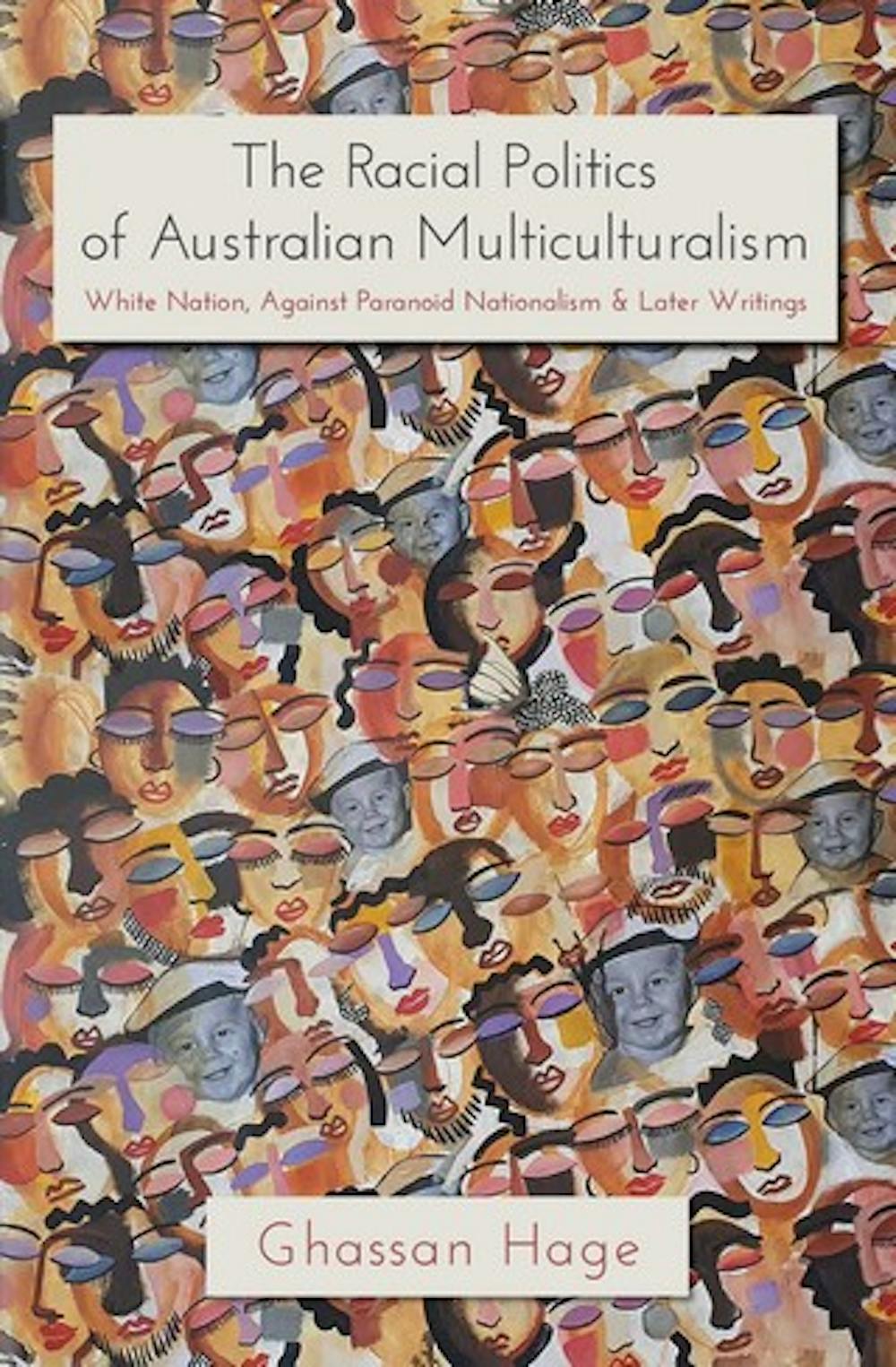

The publication of The Racial Politics of Multicultural Australia by the Sweatshop Literacy Movement represents a significant collaboration. Hage is an Australian Arab immigrant, whose forebears came to Australia in the 1930s and settled in Lithgow, where they established a clothing factory. Sweatshop is an urban political project created in western Sydney by a younger generation of Australians from Arab and other immigrant and refugee backgrounds.

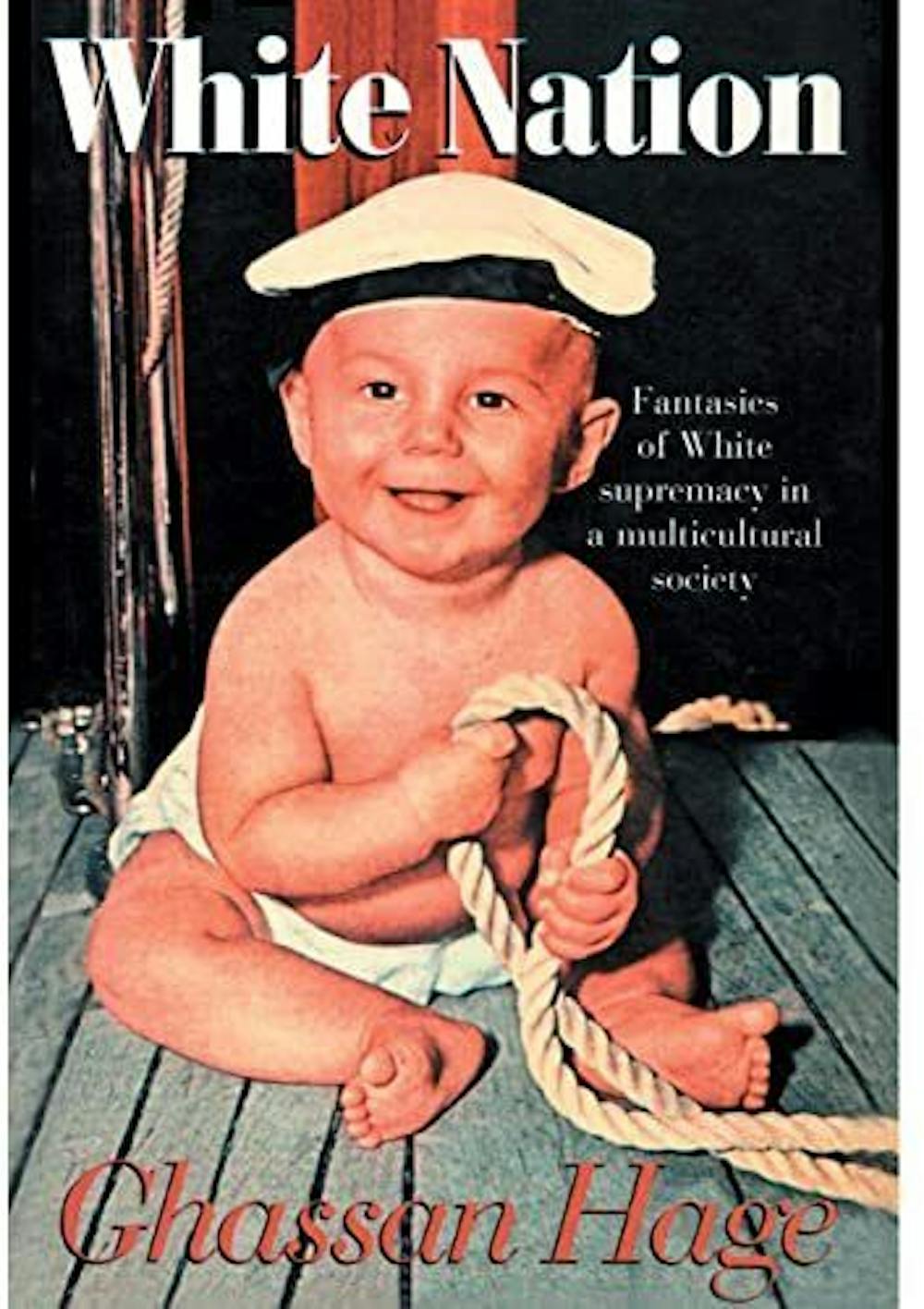
The volume contains two of Hage’s early books, White Nation (1998) and Against Paranoid Nationalism (2003), and some later essays exploring the place of racism in the rhetoric and practice of Australian multiculturalism. The foreword has been written by “critically conscious daughters and granddaughters of Lebanese, Palestinian and Egyptian immigrant and refugee settlers”, who acted as a reference group for the republishing project.

While the republished works were mainly written early in the second generation, their continuing relevance is both salutary and disturbing. The issues they raise remain deeply embedded today. Yet they also reveal how much has changed. There is a growing acceptance among “multicultural Australians” of the consciousness that Sweatshop advocates, and a moral rejection of much of the situation that Hage condemned.

Hage’s work began to take shape in reaction to the still-dominant Labor multiculturalism of the last years of prime minister Paul Keating. Hage argued that both Labor and the Coalition’s rhetoric and celebration of multiculturalism masked an ongoing reality of racial hierarchy and White privilege.

This privilege, Hage wrote, was bolstered by the capacity of official multiculturalism to authorise certain types of diversity, placing some within the boundaries of acceptability, while excluding others. Yet even behind that veneer there lies – or wriggles – another reality, where only White people are secure enough to unselfconsciously lay claim to the right to define the nation.
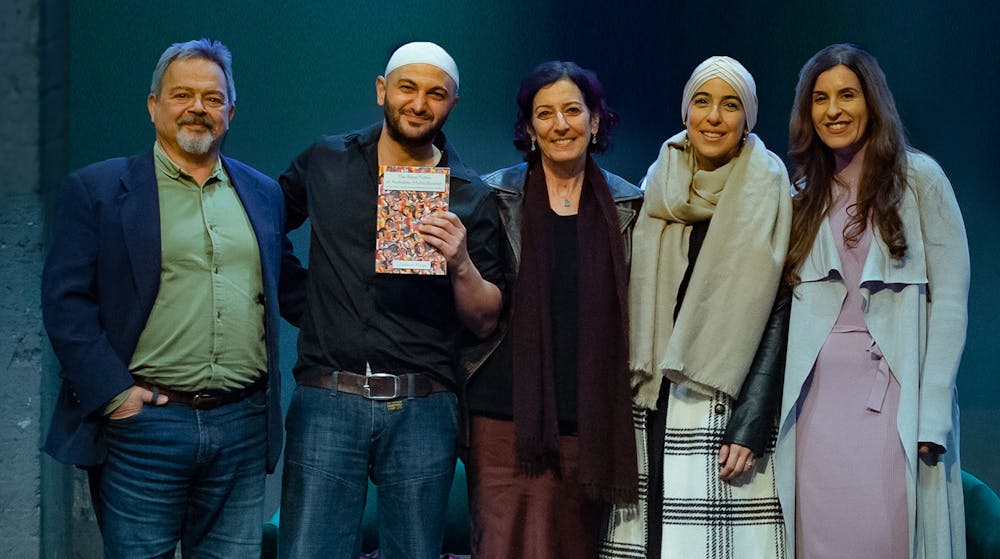
Ghassan Hage with Michael Mohammed Ahmad, Paula Abood, Sara Saleh and Randa Abdel-Fattah from Sweatshop at the 2023 Sydney Writers Festival. Image: Sweatshop Literary Movement

What is a White person?

Let’s begin with a critical question: what is a White person?

For Hage, it is a self-referential category into which White people put themselves. That is, people who think of themselves as White are White people.

It is not an ethnic label, in the anthropological sense that it has determinable mores, values and common histories that can be empirically discovered – though values and orientations are indicative. Nor is it racial, in the older sense of race as a bio-social category, with shared DNA clusters associated with territories of origin.

Rather, it is a “fantasy position” born out of colonial history, one that is essentially European. It is imagined to be rooted in the stories of north-western Europe: stories of empires won and an Enlightenment project sustained.

Reality, for a very disparate non-White world, is rather different.

Hage’s non-White world is focused on the Levant and its diasporas. It is important to understand the contradictions, for Hage, of being from Christian Lebanese stock (even without any theocratic perspective), yet oriented towards the metropolitan culture of Paris, where he studied under the sociologist Pierre Bourdieu at the School for Advanced Studies in the Social Sciences.
Hage came of age within the Lebanese Civil War. Christian fascism and the Phalange, vied with trans-Arabism and an increasingly radicalised Islam. The European, anti-colonialist, democratic, non-sectarian left also sought to find a space. These contradictory and complicated intertwinings of love and hate have drawn Hage today to a focus on the struggle of Palestinians under the Israeli occupation.

Such different realities are Hage’s project. His lifetime has been committed to exploring, exposing and unravelling the dynamics through which different pictures of the world are formed in minds, cultures and social practices, and the way these pictures are contested, hidden, revealed and sometimes purged.

The underlying frameworks, shaped by class and culture, have been forged by imperial adventures and their often murderous consequences. While Hage writes about “race”, he reminds us this is not the “race” of the initial imperial invasions. It is race introduced from another place, then subjected to the tortuous compression of settlement and the normalisation of Otherness.

Hage warns us often that he recognises the power that sought to create the “Aboriginal race” in what became Australia. Though the reality of Indigenous oppression pervades his work, he does not address it directly. But he does suggest the power of the invaders has developed into a pervasive system of racialised control.

The power to set the agenda is the scaffolding that defines the struggles of the Australian nation. The everyday conceptions of who belongs, who can claim to say who can belong, and the consequences of these types of statements, set the conditions of possibility for the nation “going forward”.

“Race” lubricates this conceptual mechanism, making it move smoothly for some, while remaining slippery and dangerous for others.


Read more: Racism of rigid legalism greets asylum seekers and their kind


White Nation

In White Nation, Hage draws on two methods: one provided by his studies with Pierre Bourdieu in Paris, and another developed in the social anthropological space of ethnography and listening.

The Bourdieu dimension translates a Marxian view of class (as in, ruling class) into a less homogenised constellation of power. In this view, cultural capital draws together skills, knowledge, languages and even “looks” that enable the individuals who have them – and, importantly, share them with others – to replicate those forms, reinforcing their value and authority.
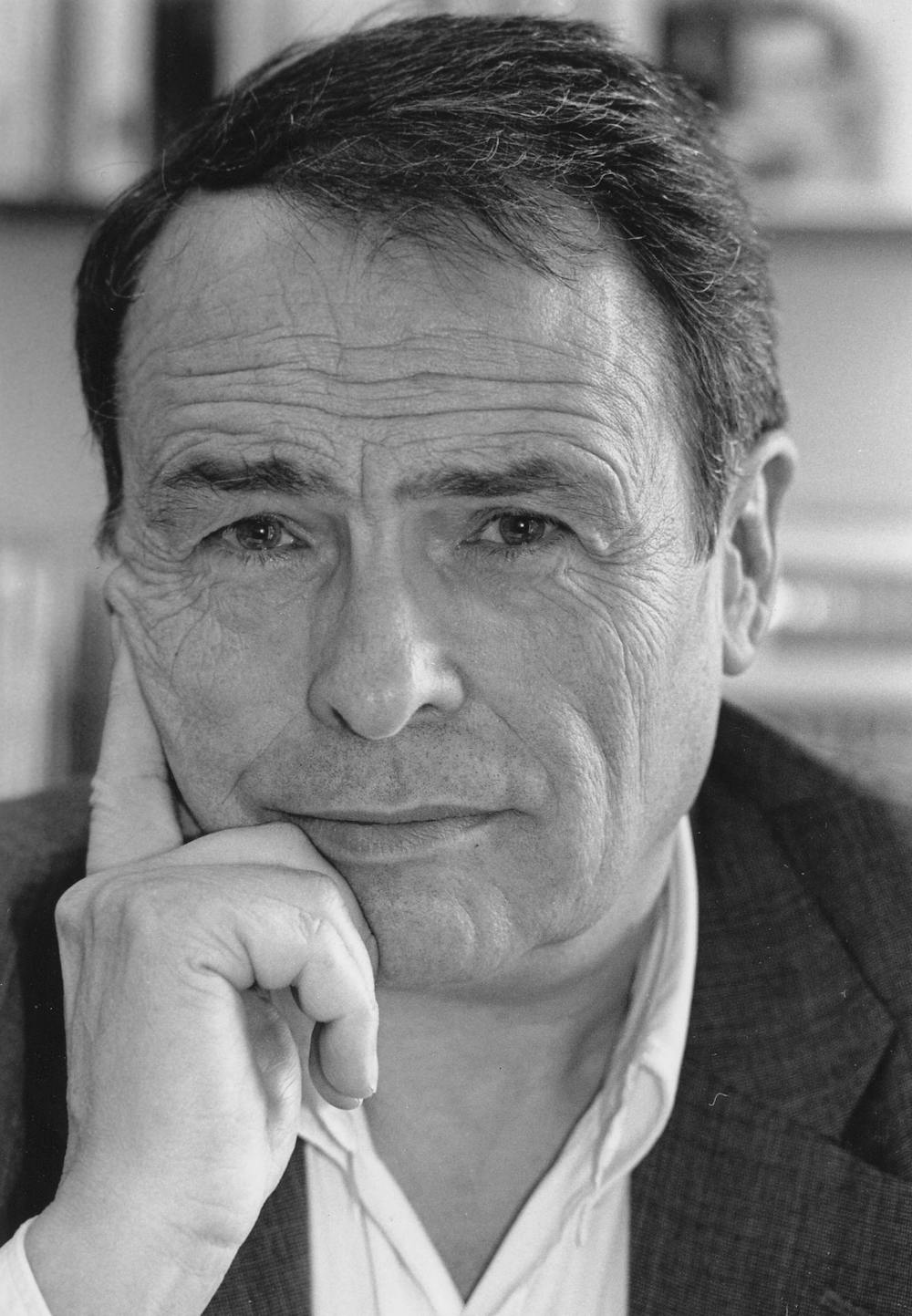
Influential sociologist Pierre Bourdieu (1930-2002). Bernard Lambert/Wikimedia Commons, CC BY-NC

Among his many sources, Hage draws on letters to the editor, which provide a wealth of narratives to be unpicked. White people, suggests one letter, are more immediately seen as Australian (part of the dominant cultural group), even when they have only recently arrived. Others who have different “looks” – those who wear distinctive clothes, for example (the headscarf is a marker of difference) – aggravate. Racial and gender power is exerted through “tearing off the veil”.

Hage proposes that multicultural policies contain, at their heart, the logic that those who advocate and celebrate tolerance are capable of being, and perhaps have been, intolerant. “Mutual tolerance”, in other words, is only possible between parties who have the power to be intolerant of each other. The multicultural edifice thus depends on intolerance – an intolerance that is contained within boundaries of acceptability, but always pressing to escape.

In a racially demarcated social space, not everyone can be tolerant. The least powerful do not “tolerate” their racist harassers. They may avoid them, or be subjugated by them, or resist them, or seek to form an alternative ethnic will.

For Hage, the dark arc of refugee incarceration demonstrates the nature of this interaction, and how it is narrativised in the cause of creating a “good” multicultural nation. The nation’s tolerant multicultural goodness is constantly being challenged by “bad” ethnics: those people who seek refuge “illegally” in Australia, or contest the hegemony of Whiteness in other ways.

As Hage notes, White multiculturalism evades any commitment that “we are a multicultural community in all our diversity”. Rather, “we” only acknowledge our diversity when we can calculate a value that can be attached to that portion we select to notice.

Moreover, argues Hage, these views, be they for or against multiculturalism, all stand upon an edifice that assumes White superiority – and fantasises Australia as a place in which White superiority “should reign supreme”.

The politics of White decline

In the decades since White Nation first appeared, the politics of White decline have become an increasingly mainstream concern.

The current debate over legislation banning Nazi symbols, ASIO’s warnings about the apparent spread of White power groups and the devastation caused by online racism have positioned the White-decline narrative as a central threat to social order. This narrative played a key part in the anti-vaxx movement, despite the multicultural makeup of that movement.
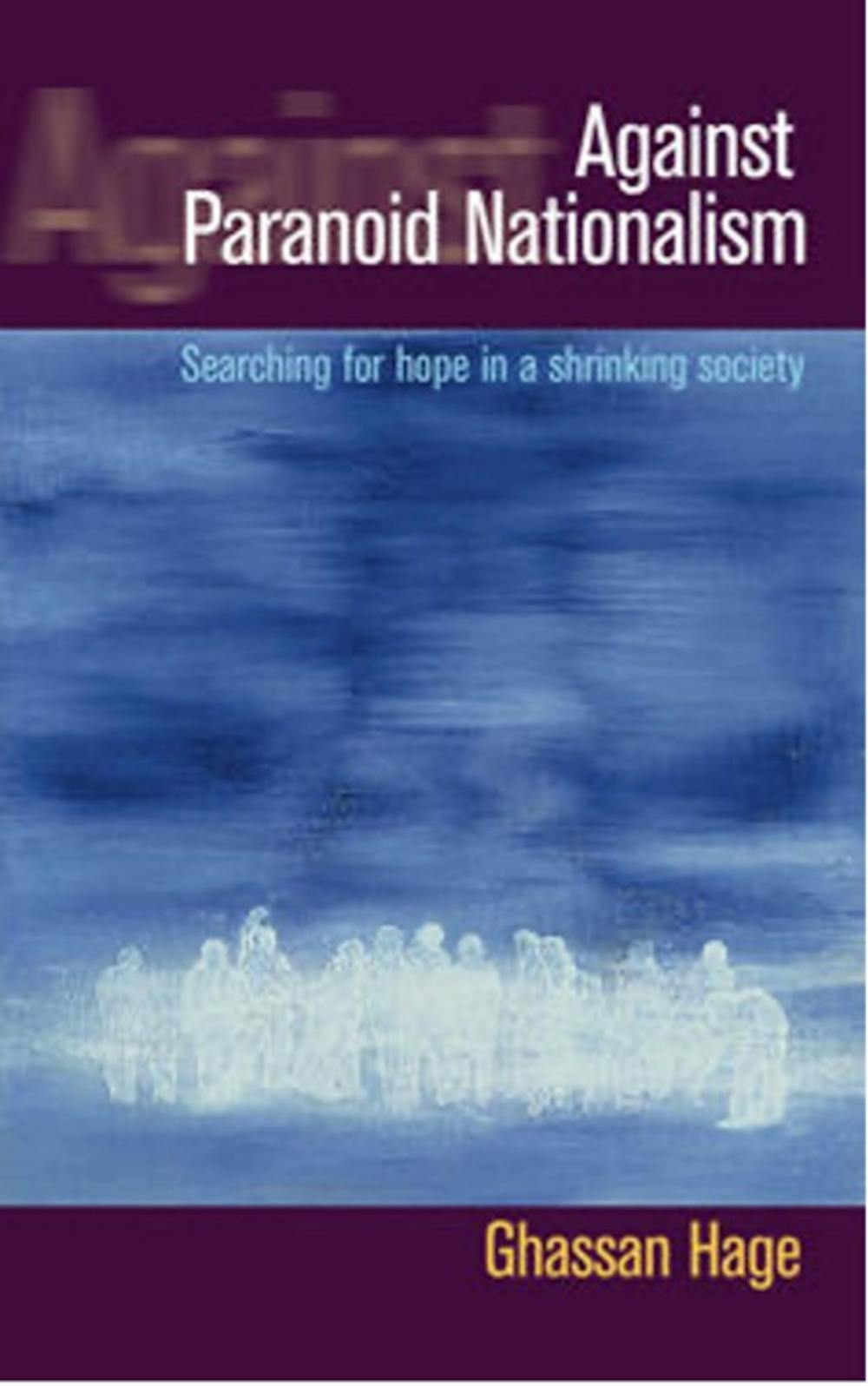
Some of this was already emerging when Hage published Against Paranoid Nationalism in 2003. The primary focus of anti-migrant sentiment the 1990s had been on “Asians”, particularly Indo-Chinese refugees, and the emerging urban phenomenon of youth gangs and triads. The events of 2001 shifted this focus. A national paranoia erupted, generated locally by “Arab” drug lords and rape gangs, and globally by Islamist attacks on Western targets.

By the time of the invasion of Iraq by Western forces including Australia in 2003, Hage had two strong characters in public life who represented and intensified this paranoia: the then prime minister John Howard, victorious in 1996, and Pauline Hanson, who entered parliament that same year as a disendorsed Liberal Party candidate. Hanson alluded to their apparent political symbiosis when she spoke of the perception that racial tensions were being “inflamed by me and condoned by him”.

Both played a role in White Nation – but they foreground Against Paranoid Nationalism.

Worrying and caring

In Against Paranoid Nationalism, Hage proposes that two opposing stances – worrying and caring – establish the parameters of the narcissism and paranoia engulfing Australia.

Worrying about the nation’s present and future breeds an intense fear and hatred of outsiders who might threaten the interests of those who claim a unique right to worry. Colonial history, as a contest of explanatory and emotional narratives, becomes a struggle between conservative critics of “black-armband” perspectives on colonialism, and progressives searching for an alternative way of thinking through the possibility of an non-paranoid, inclusive identity.

The book, more of a compilation of linked essays, opens with an argument that neoliberal economic theory reshapes the social into a market, where individual interests emerge paramount and communal sense fragments and dissipates. What holds such a society together is the cultivation of images of threat.

Only strong and selfish stances are considered sensible and authorised by the state. It claims alone to stand against the threat from without – exemplified by asylum seekers and Islamist terrorists – and threats from within, from Indigenous challenges to the colonial project, and ethnic enclaves that emerge like cancers.

The state “worries” for the national project and those who support it. In the process, people become less willing to hope for a more caring future.

Against Paranoid Nationalism ends with a reference to what Hage calls the Black Economy – that is, an economy that depends on the theft of Aboriginal land. Even the “social gifts” that recognise the presence of individuals, and to some extent succour them, are a consequence of Australians being receivers of stolen goods.

Hage concludes that “our colonial theft […] will remain the ultimate source of our debilitating paranoia”, forcing us to worry and never really letting us care.

Against Paranoid Nationalism, together with the later essays collected in The Racial Politics of Multicultural Australia, offers a readable and challenging engagement with the issues that confront us today as a multicultural nation – one with a history of colonial invasion, but which is, by daring to hope, seeking not to have a racist future.

Hage has made a singularly powerful contribution to our understanding of Australian and global racism, and the politics of domination and resistance. He recently celebrated his mentor, Bourdieu, in a series of European lectures. Bourdieu, I am sure, would be proud of his student. We are all the better off for Hage’s eclectic, systematic, imaginative and penetrating assessment of the human condition in this time of late imperialism.

Ghassan’s Response/reaction from Facebook

https://www.facebook.com/plugins/post.php?href=https%3A%2F%2Fwww.facebook.com%2Fghahagea%2Fposts%2Fpfbid02RsrSP1UTwxSaNxxtMgW73utmTRs5EyU36ejEYRe8KQMVKVgPKiiXdwgQTEdgvTqYl&show_text=true&width=500

This review means a lot to me. some history. In the early 1980s I had come back from my studies in France (1982-83) and was writing my PhD on Lebanese Christian modes of identification during the Lebanese civil war at Macquarie University. At university I was part of a group of Marxist PhD students organised around Mervyn Hartwig and Rachel Sharp known as The Friday Group. We met almost every Friday, had dinner, drank a lot of wine and debated till very late at night, at Mervyn and Rachel’s house, the primacy of class, the primacy of the mode of production, the primacy of anything Marxist really. These debates were important for my thesis. I was deeply immersed in the literature concerning the nature of the Lebanese conflict: is it a class conflict or is it a confessional conflict? Are ethnic conflicts a mystification of class conflict as some ‘vulgar’ Marxists would have it or do they have to be understood in their own terms? The Lebanese war was accompanied by an intellectual war between Marxist- and Weberian-inspired analysts. and though living in Australia I saw myself as participating in this war.

But then, in the Friday Group, there were a couple of people, Mary Kalantzis and Bill Cope, who worked at the University of Wollongong and were deeply involved in the politics of Australian Multiculturalism. Through them, it quickly became clear to me that the academic debates around multiculturalism were not dissimilar to the debates regarding Lebanese identification: ethnicity or class? Marx or Weber? and the politics around multiculturalism was also accompanied by an intellectual war that was just as intense as the intellectual scene in Lebanon, between radical political economic critique of multiculturalism that highlighted class forms of domination and Weberian conservatives, or at least who were portrayed as conservative by us Marxist (for, to be clear, I was no innocent non-partisan bystander in this conflict).

It was in this scene that I became familiar with the name of Andrew Jakubowicz who was the director of the Centre for Multicultural Studies at the University of Wollongong then. He was basically the star of the anti-Weberian camp leading the class warriors against his very own supervisor Sol Encel, a conservative Weberian. I still have a vision of Andrew arriving to speak at a conference around Multiculturalism at Wollongong where he was attacked by Encel and others in a pre-circulated paper. He arrived and he was truely our radical prince: intellectually and politically sharp, but also charismatic and as spunky as an intellectual can be.

This is enough I think to make you understand why this review is not like any other review for me. But as will be clear when you read it, Andrew has really read or re-read The Racial Politics of Australian Multiculturalism. I am very grateful to him for the labour he has put into writing this.

Is it multiculturalism for all Australians or just some of them (us) (you)?

The Multicultural Framework Review was launched on Friday evening, June 2. It raises the question, is multicultural policy something that should be “for all Australians” as was declared in 1982, (http://www.multiculturalaustralia.edu.au/doc/auscouncilpop_1.pdf)  or just to ensure, as the announcement of the Review put it in February  “no one is left behind, and everyone feels that they truly belong”( https://www.homeaffairs.gov.au/reports-and-publications/submissions-and-discussion-papers/multicultural-framework-review ) ? The Albanese government’s Multicultural Framework Review, shepherded by Immigration and Multicultural Minister Andrew Giles,  has possibly been set the more modest goal, despite a recognition by one of its panelists, Melbourne lawyer Nyadol Nyuon, that the original multicultural policy developed fifty years ago by the ALP’s Immigration Minister Al Grassby “had a far-sighted vision of what this country could become”.

The government has identified the triggers for the review – “nine shameful years of fear-mongering and division… failures to translate vital health information during the pandemic, and government support and grant programs inaccessible to emerging migrant groups”.

The revised Terms of Reference (https://www.homeaffairs.gov.au/about-us/our-portfolios/multicultural-affairs/multicultural-framework-review note that the Review is designed to help ensure a government that works for a multicultural Australia. While it eschews a human rights perspective it does identify discrimination, systemic barriers and gender intersectionality.

While the ALP won the 2022 election with seats gained by “multicultural Australian” candidates, it also lost the most multicultural electorate of Fowler to a local candidate Dai Le who campaigned successfully against the marginalisation and abandonment of those multicultural voters during the pandemic and the parachuting in of a White candidate. With the opening up of borders and the resurgence of the issues raised by immigration, multicultural policy is once more critical to wider social well-being.

Over the past decade perhaps the biggest sleeper issue has been the massive increase in extremely insecure temporary migration, sometimes used as a subterranean route to permanent settlement. However public policy has assumed that “temporary” means “not requiring support”, so the level of services – from housing to transport to education to employment protection to health – have not factored in these supposedly temporary but very real residents. They were the ones most abandoned during the pandemic, when they were told simply to “go home” or to survive on the streets. Now they’re coming back.

There are three broadly intertwining spheres of policy that require major refreshing – multicultural policy (including language policy, intercultural relations, cultural recognition, employment policy), settlement policy (focused on new arrivals both refugees and others, including trauma recovery), and community relations (covering discrimination, anti-racism, diaspora continuity and social integration, and the all-important dimension of settler-Indigenous relations).  These are serious dimensions of governance that have been left to decay for the past generation, including during the ALP inter-regnum from 2007 to 2013.

Multicultural policy reached its apogee in 1989, with the Hawke government’s National Agenda for a Multicultural Australia. It began to decline under PM Keating who did not implement key elements of the policy. It was picked apart by PM Howard for whom multiculturalism was an anathema. Most of the damage done by Howard has been let lie.

In order to see what was lost and what now might be worth reclaiming, we can identify the targets of the Howard attack. While driven by the 1984 Blainey critique of Asian immigration and the 1988 Fitzgerald review of immigration and multiculturalism (Fitzgerald was a fervid but not successful opponent of the multicultural agenda under Hawke), the accelerator for the bonfire came from the impact of Pauline Hanson on the conservative parties in 1996.

Howard’s most critical move was the effective abolition of the Office of Multicultural Affairs, the co-ordinating policy section in Prime Minister and Cabinet. This was closely followed by the closure of the empirically-focussed Bureau for Immigration Multicultural and Population Research, condemning policy for the next generation to hyperbole based on prejudice, ignorance and ideology. In the wash the National Language Policy also dissolved, reducing the bilingual capacity of the country for decades to come. Keating had already given up on any attempt to introduce a Multicultural Act as in Canada, focusing instead on Access and Equity in government, while deeding the country the fairly toothless Racial Hatred amendments to the Race Discrimination Act (so called 18C).

How open is the the power hierarchy in Australia to non-European Australians? Addressing this issue remains a major challenge – best seen in the make-up of the High Court, the members of the Board of the ABC, the Vice Chancellors of the Universities, and the Boards of the major ASX companies (https://apo.org.au/node/140206).  

The Review will consider the Commonwealth’s activities and will be able to make recommendations on legislation, policy settings, community relations, and government services including state and local. Importantly it will consider the role of the Commonwealth as an employer, as recent studies have pointed to the under-representation of culturally and linguistically diverse groups in government at both Commonwealth and state levels. Better put, well-paid White monoglots run the services in the broad, and non-White multiglots deliver them – in greater proportions the lower the pay levels.

Unfortunately the Review is not asked to take notice of the poor state of Australia’s data on diversity and its appalling consequences, most significantly in the pandemic https://johnmenadue.com/a-tale-of-two-cities-same-pandemic/  and https://theconversation.com/we-need-to-collect-ethnicity-data-during-covid-testing-if-were-to-get-on-top-of-sydneys-outbreak-164783)but also today in terms of mortality from COVID, now particularly destructive among older “multicultural Australians”.  Neither is it asked to consider how to rebuild the depleted state of Australian research in the area, a central recommendation (at page 123) of the last ALP-led parliamentary committee review of multicultural policies in 2013(https://www.aph.gov.au/parliamentary_business/committees/house_of_representatives_committees?url=mig/multiculturalism/report.htm)  (and totally rejected by the incoming Abbott government).

The Panel chair Dr Bulent Hass Dellal, is well-blooded in these debates. He has held to a sensible course as a government advisor throughout the Abbott/Turnbull/Morrison period, and also has the confidence of the new government. Interestingly Giles has chosen two Victorians and a Queenslander for his team, leaving NSW to two people on the Reference group, with someone from Tasmania, South Australia and Western Australia.

There are no First Nations people, or people with mixed First Nations and non-Anglo heritage, though they will be invited to contribute their perspectives. As the Voice debate has shown,  multicultural Australia wants to engage with the Indigenous peoples (https://theconversation.com/will-multicultural-australians-support-the-voice-the-success-of-the-referendum-may-hinge-on-it-199304) .

The government has appointed no academic researchers to either the panel or the reference group, though Queensland’s Christine Castley is a former Deputy Director General of Premier and Cabinet, a Board member of the University of Queensland Institute for Social Science Research, and currently CEO of Multicultural Australia, a service delivery conglomerate heavily funded by the government.

From the perspective of Australia’s knowledge communities (identified in the Review as experts to be consulted) with an interest in cultural and linguistic diversity, and what the Diversity Council of Australia now refers to as “racialised marginalisation”, the commencement of the Review is disappointing. The absence of issues about data (which are currently focussing the minds of the Australian Bureau of Statistics in preparation for the next Census (https://consult.abs.gov.au/census/2026-census-topic-consultation/) ), the complete exclusion of the research structure issues, and the small passageway left open for consideration of an Australian Multicultural Act (one is already on the Senate table from the Greens dating back to 2017) and agency associated with the Department of Prime Minister and Cabinet, are not comforting signs of recognition of the scope that needs to be addressed.

Most unfortunately this Review is being sponsored by a junior Home Affairs Minister. In previous times multicultural policy was thought important enough to have the support and imprimatur of the Prime Minister – be it Malcolm Fraser or Bob Hawke. Not so now.

How will Sydney’s ethnic groups vote in the NSW State election, and what difference will it make?

A provocation

https://iview.abc.net.au/video/NSWX2023102138510

The key electorates that most likely will determine the NSW election lie in a cluster through the centre and west of Sydney. This piece deals with two of the electorates (Kogarah and East Hills the closest for each of the major parties) but readers can do their own arithmetic in seats in which they are interested. The ABS provides good summaries for all state electorates based on the 2021 Census. I will do a wider post-mortem next week.

If we look at elections where ethnicity has been salient, they have certain features. Governments are on the nose due to corruption, and their leaders carry the opprobrium of corruption and racism. Rather than moral leaning and personal self interest framing voters’ decisions, they have been elections where voters have been personally angry about issues and behaviours that have made them personally uneasy. This election is being held in the wake of COVID, when lock-downs, surveillance and harassment were widely active in western Sydney. Values triggered there include opposition to vaccination, frustration with job loss and financial stress.

Taking these factors into account I think that the ALP will have a more difficult time than often predicted in winning enough seats to form even a coalition government, especially in the optional preferential environment where protest votes that might have tended back to Labor may well dissipate. With an anti-vax and anti-lockdown group running, and One Nation and other conservative groups looking to play to conservative anxieties, the dissipation of votes in many ethnic communities may be quite high. Also Perrottet was the politician who adopted the most anti-vax position from the outset and argued most strongly against COVID control measures (business closures, social distancing, mask wearing}. He was the closest Australian politician to UK prime minister Boris Johnson with his let-‘em-rip approach.

In this context I want to look at two ancestry groups. Usually they need very strong reasons to activate their concerns about racial marginalisation. The Census provides a raft of characteristics to help us understand cultural diversity. These include Ancestry, country of birth, parents’ country of birth and language spoken at home.

In Kogarah, ALP leader Chris Minns holds the seat by a whisker. In 2021 the seat had 71.5% of households where a non-English language was spoken, with 25% either Mandarin or Cantonese. While Nepali and Greek speakers are also significant, the Chinese community, if it acts in one mind,  will decide the outcome. After some difficulty in finding a candidate the Liberals chose Craig Chung, a moderately well-known business figure in the Chinese community. The Chinese communities have no particular reason to hate Perrottet – as they did when they helped knock off John Howard in Bennelong in 2007, and Morrison everywhere in 2022. While the bend towards conservatism among the Chinese may be offset slightly by a more ALP tendency among Nepalis, the Orthodox and Catholic members of the Greek and Lebanese communities were amongst those who voted against same-sex marriage back in 2017. While there is no Christian bloc candidate, Perrottet is also a safe bet. Also Minns has been leading his state campaign elsewhere, leaving Kogarah fairly open for Chung to appear everywhere, including doing Chinese community radio. Independent Troy Stolz, running on an anti-pokies platform, may also draw votes away from Minns.

Some of these same factors operate in East Hills, a nearby Liberal electorate held by Wendy Lindsay and being contested by Kylie Wilkinson for Labor; the women have similar profiles as active local community participants. A classic multicultural electorate that spreads from Bankstown through Panania to Revesby, 50% of residents use a language other than English. The main ethnic groups include Lebanese, contributing to the 13.6% the population who espouse Islam, and 12.9% who use Arabic at home. Chinese and Vietnamese speakers make up about 7% each. It is also a religious electorate, with less than 20% claiming no religion (Australia is 38%), while 25% are Catholic and 8.2% Eastern Orthodox; again. This suggests an attraction towards the more socially conservative views of a Perrottet-led government.

Based on previous elections and voting tendencies, I would not be surprised if Wendy Lindsay retained her seat, while Craig Chung becomes the new member for Kogarah. Labor could still become the government, but it would be as a minority and perhaps without Chris Minns in the driving seat. However as the pundits have noted, with a multitude of parties and candidates, and dissipated preferences, anything could happen.

Why Harmony Day is a con… and what about Australian racism it is trying to hide.

ABC Story link

Harmony Day a ‘con job’ to avoid talking about racism

Andrew Jakubowicz, a professor of sociology at the University of Technology Sydney, describes Harmony Day as a “con job” designed to avoid addressing questions about racism.

“It’s all about making people feel that there’s really no problem with people who are different from them, and if you share food from different countries and you dress up in different clothes and everyone sings and dances, then the whole problem of racism disappears,” Professor Jakubowicz said.

“In terms of addressing the causes and processes through which racism is reinforced, it set that back dramatically.

“If you can’t talk about what is actually going on, and address the dynamics that are actually occurring, then you are guaranteeing that they will continue to be problematic and cause deeper and deeper hurt and destructiveness in Australian society.”

Professor Jakubowicz spent 15 years trying to get his hands on the secretive research, commissioned by the Howard government following the Coalition’s 1996 election win, which formed the basis for the launch of Harmony Day.

He says then-opposition leader John Howard opposed the Keating government’s plan to criminalise hate speech, and committed a Liberal government to establishing an “education campaign” instead.

Let’s talk about racism this Harmony Day

The United Nations marks March 21 as the International Day for the Elimination of Racial Discrimination, but we celebrate it as Harmony Day, writes Erwin Renaldi.

Colour photograph of women with heritage from Africa and Asia at a multicultural fashion festival in Tasmania

Read more

“Howard won the election and, soon after that, began the process of trying to work out what to do with his promise,” Professor Jakubowicz said.

Against the backdrop of a growing One Nation and a push against political correctness, the Howard government commissioned surveys into race and racism.

“What they came up with was something that shouldn’t have surprised them but worried the researchers, and it definitely spooked the government,” he said.

Professor Jakubowicz says the study found “racism in general was quite widespread in the Australian community, particularly against Indigenous people, but also against immigrants”, but there was “antipathy” towards addressing the problem.

“In the research, the researchers came across this notion that the only term that they could get a majority support for in qualitative and quantitative research was that people supported the idea of a harmonious society,” he said.

“The harmonious society depended on other people not behaving in ways that made me, you, I, discomforted.

“That’s where Harmony Day came from.”

KEY DOCUMENTS

https://andrewjakubowicz.com/publications/antiracism1998/ and https://andrewjakubowicz.com/publications/living-in-harmony-1998-2001-campaign-and-evaluation