This Youtube Vid of a Powerpoint provides a work in progress for a paper under development. The paper is an output of the Cyber Racism and Community Resilience research project, funded under the ARC Linkage scheme. We seek informed and constructive feedback, which can be posted through the Comments link. All on topic comments will be approved subject to basic codes of civility.
Author: Andrew Jakubowicz
Andrew Jakubowicz is Emeritus Professor of Sociology at the University of Technology Sydney, Australia.
Cronulla riots: 10 years what have we learned
See on SBS Page
In December 2005 I was discussing inter-group issues with a Palestinian sociologist at Haifa University; reflecting on the breaking news from Cronulla, he suggested I might like to stay in Israel for a while. News of the conflict travelled far and fast.
Who has learned what from those violent days in that hot summer? The build up at Cronulla was set against a year of growing tension, with news reports of gang rapes, beach-front violence, and increasing racially-charged stirring by shock-jock Alan Jones.
Despite the denials of PM Howard, Cronulla was a quintessential modern Australian mess.
The key participants in those events and their aftermath are drawn from every part of Australian society – the coastal communities with their own histories of sexism and violence, the western suburban communities of the children of the refugees of a generation before, the conservative heartland of the Liberals, and the knock about branch stacking of the Labor Right. Despite the denials of PM Howard, Cronulla was a quintessential modern Australian mess.
When Strike Force Neil later reported to the NSW Cabinet on the debacle of the day and the retaliation raids in the aftermath, it revealed a police and government uncaring and unprepared, with no intelligence of what was happening in the communities, and no capacity to foresee and thus be forearmed or even forewarned, and no public presence in the ongoing debate.
The police learned a lot from Cronulla: they became militarised, they modernised with riot squads, body armour and anti-personnel ordinance. Their command and control structures were reinvigorated with a much greater planning and response capacity. Most importantly but not sufficiently, they realised that community relations and engagement would be crucial. While a battle raged in the upper echelons of the NSW Police over corruption and competence, the first steps were made, albeit on tottering ankles, to lay down long term positive relations with some of the communities. Ironically the relations are today better with the Muslim communities, from which most intelligence now comes, than their non-Muslim antagonists, whose rallies on Cronulla Day will do most to stoke community apprehension and anger.
So one lesson from Cronulla that has bitten for both absolutists and white racists, has been that hate speech works for them and their causes.
The political class has learned very little. They appear not to realise that the absolutist wing of the Islamic groups need their Islamophobia to gain purchase on the apprehensions of the wider Muslim communities. Whenever a Federal minister slings off at a Muslim leader, often in an ill-considered and demeaning way, he or she adds to the evidence that absolutists use to intimidate their own communities into subservience to the Jihadist fantasy of a Caliphate.
Whenever a ministerial slam is made on a Muslim leader, the racist Right draws courage from the affirmation they see for their claims to the irremediable deviance of all Muslims. So one lesson from Cronulla that has bitten for both absolutists and white racists, has been that hate speech works for them and their causes. Reclaim Australia and the Jihadists desperately and achingly need each other; no one else does.
The Muslim communities have learned that they face two enemies. Inside Islam, they are continually harassed by extremists, who want all Muslims to turn their backs on the values of democratic Australia and to bow unthinkingly before the ideologues of Islamism. Outside Islam they confront a spreading stain of invective and hatred from non-Muslim society, occasioned by the violence of small minorities, which preach the religion of despair. This has become an excruciatingly painful impasse in which to be trapped.
Ten years after Cronulla frightened and angry non-Muslims will rally at Cronulla to “celebrate” what was in truth then not even a Phyrric victory. They will be protected and deterred by a heavy police presence, now steered by people who have studied the mistakes of the past, and the somewhat limited successes (such as the prevention of the attack on the US Consulate through Hyde Park in 2012).
Cronulla has taught us that sustained engagement, active and respectful listening, and creative involvement…remains crucial to building the trust that necessarily underpins the social capital of a cohesive society.
State politicians in NSW will be better guided by a major strategy of community engagement and social cohesion, and few if any will be allowed by their leaders and advisers to erupt into the demagoguery and rhetoric of 2005. Federal Liberal politicians, with no such strategy and an emotional imperative that seems to demand they call out to the most fearful and least rational parts of the community, will probably do so again as they have done in recent days.
Australians have moved a few steps beyond the aged supporters of 18th century France’s Ancien Regime, which had learned or forgotten nothing. Cronulla has taught us that sustained engagement, active and respectful listening, and creative involvement, enabling people to put down a stake and a place in the complex web of reciprocal social relations, remains crucial to building the trust that necessarily underpins the social capital of a cohesive society. Unfortunately those who do not want to see that trust realised are all too eager to find every opportunity to let the conflict rip.
Why Australia needs a Multiculturalism Act and why Malcolm Turnbull should deliver one.
Shorter version publlished through The Conversation, with 100+ comments (some people are scary)
When Australia’s Prime Minister Malcolm Turnbull in early November used a celebration of Australian multiculturalism to open a speech justifying increased penalties for ever-younger potential jihadis, he made two rather profound statements. For the first time since Bob Hawke an Australian Prime Minister centred multiculturalism as a potential strength in building national security. In the same breath he demonstrated that it had failed in that task, as punitive sanctions were required because by implication multiculturalism had not been successful enough.
The reason for the failure was left to us to discern. I argue that the key reason for multiculturalism not providing “the cement for all Australians” that PM Howard had derided in 1988, lies in the refusal of national government after government since Hawke to legislate for its application to public life. Unlike the major states that have had no problem with multicultural legislation, the Commonwealth has surrendered the territory that effective multicultural policy should occupy, by pre-emptive buckling to nativist Right wing populists, and more recently, to jihadist ideologues with no interest in Australia. Continue reading “Why Australia needs a Multiculturalism Act and why Malcolm Turnbull should deliver one.”
Notes on launching “The Martin Presence”
The Martin Presence: Jean Martin and the Making of the Social Sciences in Australia
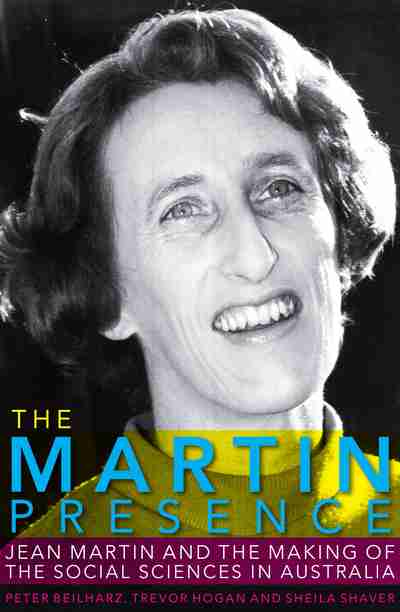
Paperback | Jun 2015 | UNSW Press | 9781742232164 | 304pp | 234x153mm | Stocked item (plenty) | GEN | AUD$39.99, NZD$47.99
Digital (EPUB) | Jun 2015 | UNSW Press | Stocked item | GEN
Digital (EPUB) | Jun 2015 | UNSW Press | Stocked item | GEN
Launched by Andrew Jakubowicz at Gleebooks Sydney 18 June 2015
- I recognise the Gadigal people of the Eora nation. Great honour to be asked to launch the book by . On reflection it may be that there are few enough of us around that knew her and still have held onto the memory. I am reminded of my own somewhat inglorious earlier years by the authors’ account of internal struggles over the control of the sociology journal 45 years ago. Terrifyingly, it was just a moment ago.
- A week ago in Warsaw in the palace of culture I was engaged with Polish scholars on the future of multiculturalism. Next was two days of refugee survival conferencing during and after WW2. The qualities of the dialogue in both cases had many Martinesque qualities.
 Andrew Jakubowicz